Phonics
Essential Letters and Sounds
At Stanion C.E. Primary School, we recognise that learning to read is fundamental to children's education. We aim to ensure that all children develop the phonic knowledge and skills needed to become accurate, fluent and confident readers.
We use Essential Letters and Sounds (ELS), a Department for Education (DfE) validated systematic synthetic phonics programme. It provides a structured approach to teaching children how to read and spell.
The Principles of ELS
ELS is based on five key principles:
- High-quality teaching: Daily, whole-class phonics lessons follow carefully planned and structured lesson sequences.
- Consistent terminology: The same language is used by teachers, children and parents to support understanding.
- Consistent resources: Resources are used consistently to support the teaching and application of phonics.
- Repetition and reinforcement: Previously taught sounds and skills are revisited regularly to secure learning.
- Keep up, not catch up: Regular assessment identifies gaps in knowledge so that additional support can be provided promptly.
How We Teach Phonics at Stanion
Children begin daily phonics lessons in their first full week of Reception, the daily sessions then continue until the end of year One. Teaching follows the carefully sequenced progression of ELS, with children learning new sounds and spelling patterns in a planned order. They are taught to recognise the relationship between letters and sounds and apply this knowledge when reading and spelling.
All children take part in daily phonics teaching. Teachers assess understanding throughout lessons and provide immediate support where necessary. In addition, formal half-termly assessments are used to monitor progress, identify gaps in learning and inform targeted interventions.
Our aim is to ensure that children keep up with the programme and receive additional teaching as soon as a difficulty is identified.
How Does ELS Teach Children to Read and Write?
ELS follows a systematic synthetic phonics approach. Children are taught to:
Decode – Reading
- Recognise the sounds represented by individual letters and groups of letters.
- Blend sounds together to read words.
- Apply their phonic knowledge when reading books and unfamiliar words.
Encode – Spelling and Writing
- Identify the individual sounds in spoken words.
- Segment words into their component sounds.
- Represent sounds using the appropriate letters or groups of letters when spelling.
These skills are taught progressively and practised regularly to develop accuracy and fluency.
Developing Reading Fluency and Comprehension
Phonics provides children with the essential foundations for reading. However, becoming a fluent reader also requires the development of vocabulary, comprehension and understanding.
As children progress through the school, we continue to develop their ability to:
- Read accurately and fluently.
- Read with appropriate expression.
- Understand and explain what they have read.
- Retrieve information from texts.
- Make predictions and draw inferences.
- Use their knowledge and understanding to interpret texts.
- Develop vocabulary and comprehension skills.
These skills enable children to access age-appropriate texts independently and support their learning across the wider curriculum.
The Structure of ELS Lessons
ELS lessons follow a consistent and predictable structure. This enables children to become familiar with routines and focus on the learning being taught.
Lessons include opportunities to revisit previously taught sounds, introduce new learning, practise blending and segmenting, and apply phonics knowledge to reading and spelling.
The carefully sequenced approach reduces unnecessary cognitive demands and allows children to build on what they already know.
Supporting Phonics at Home
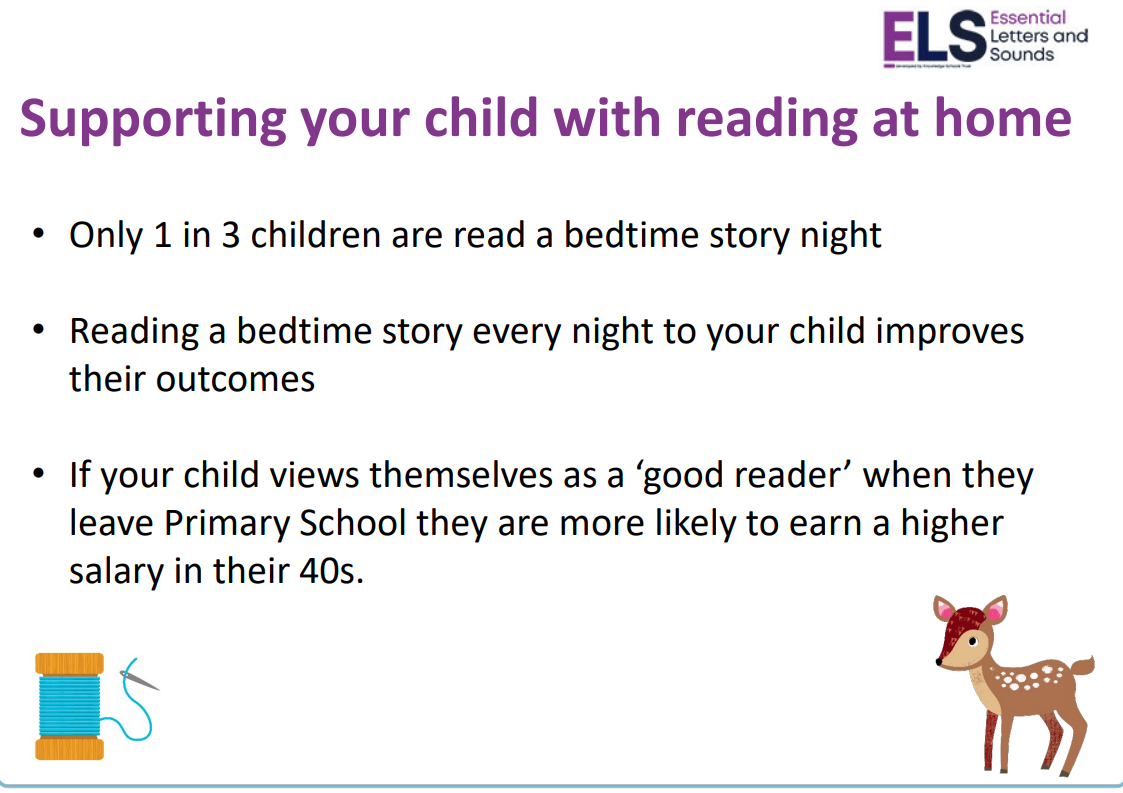
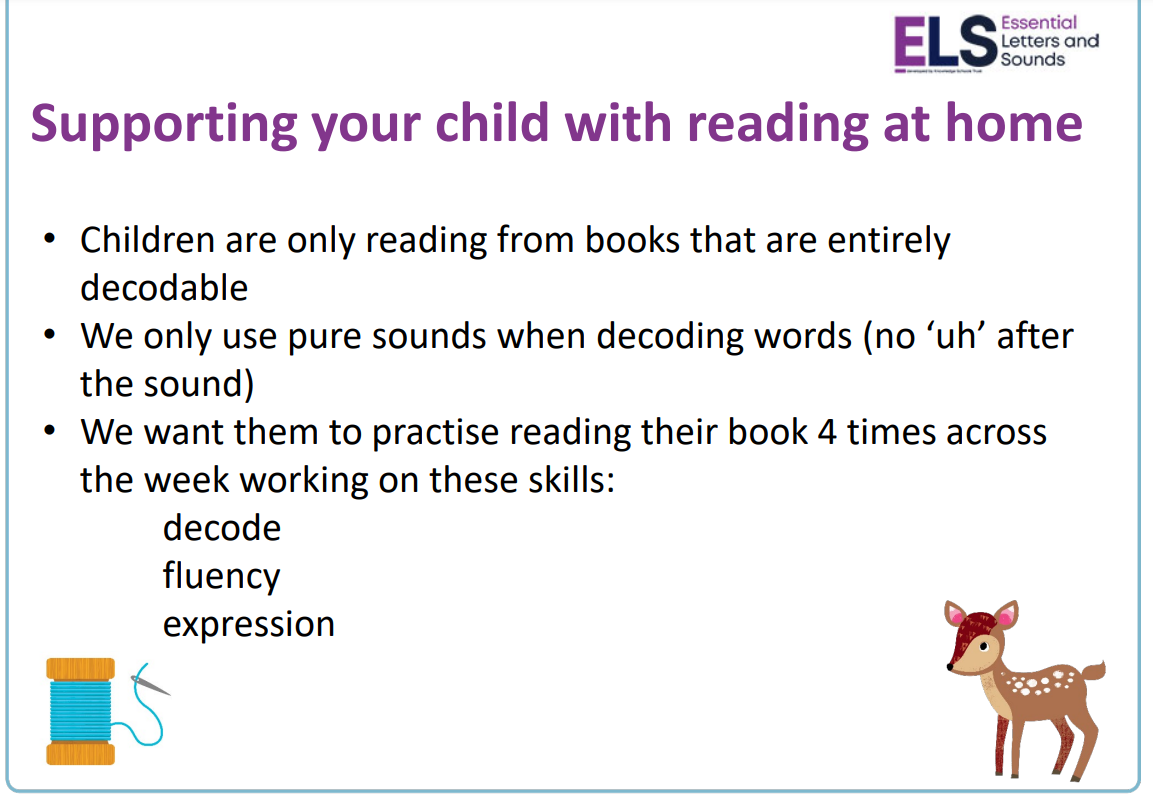
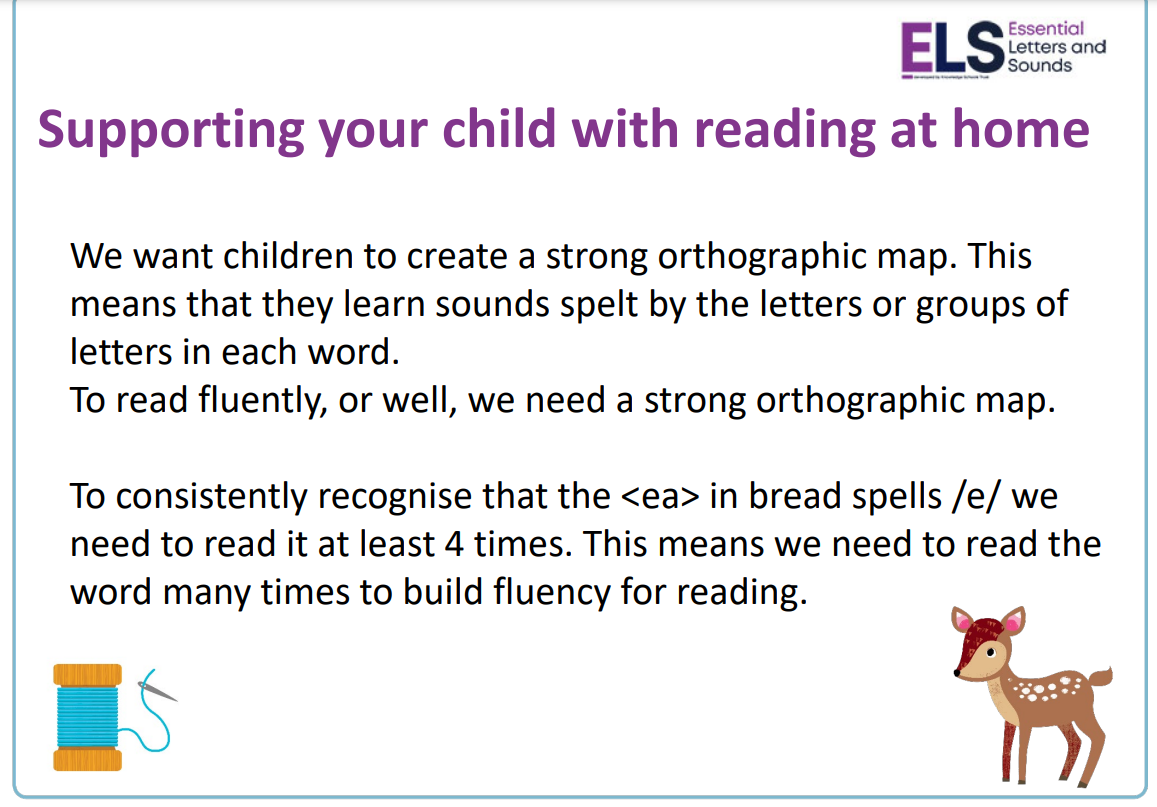
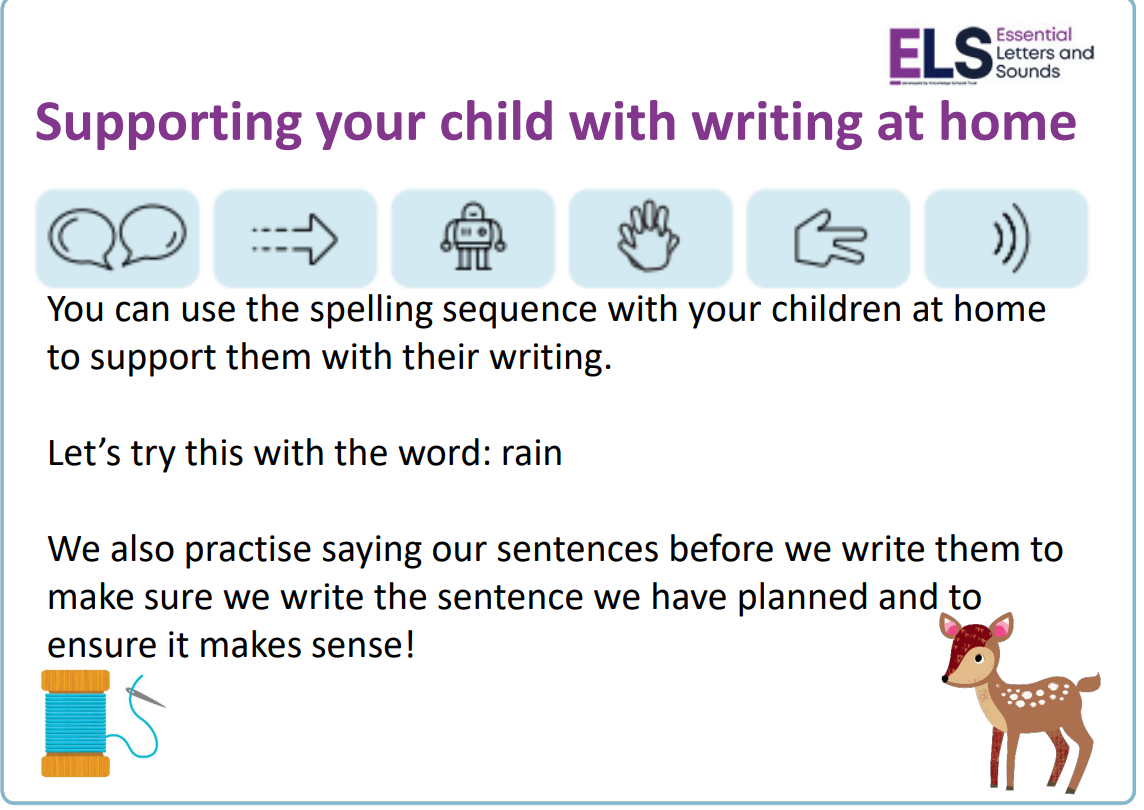
Parents and carers play an important role in supporting children's phonics development. Regular reading at home and opportunities to practise taught sounds help children consolidate their learning.
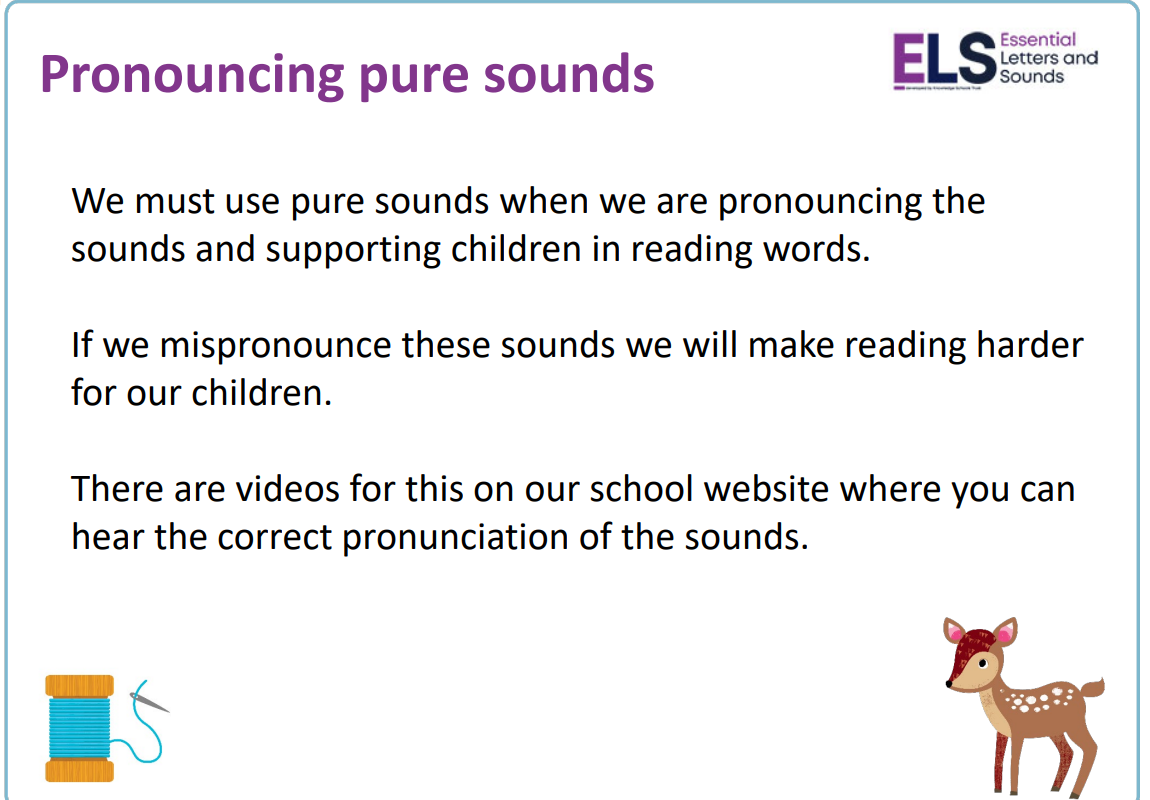
The following videos demonstrate the pronunciation of the sounds taught in Phases 2 and 3. They are provided to help parents use the same pronunciation as children hear in school.
Phase 2 – Pronunciation Video - Phase 2 sounds.mp4 | Videos & Movies on Vimeo
Phase 3 – Pronunciation Video- Phase 3 sounds | Videos & Movies on Vimeo
Working together, home and school can provide children with consistent opportunities to practise and apply their developing reading skills.